CETMAR assesses the effects of marine protection and planning on artisanal and coastal fisheries in the Cantabrian Sea
- With funding from the Biodiversity Foundation, the Galician institution will work together with the Spanish Institute of Oceanography and the University of Oviedo on the development of the Esparde project, whose objective is to study the social, economic and environmental impact of the displacement of small-scale fishing fleets.
- The initiative will analyze how restrictions on fishing grounds modify the activity of vessels based in Galicia, Asturias and Cantabria, with the aim of improving the design of marine policies.
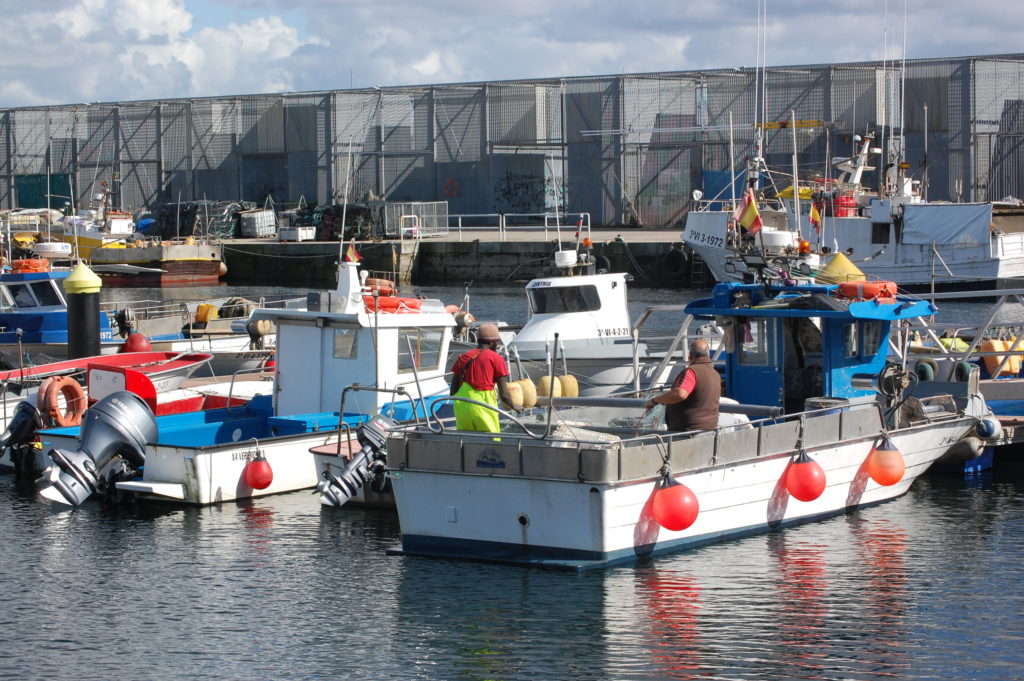
The Marine Technology Centre (CETMAR) will work over the next two years on the project “Esparde – Effects of the Spatial Displacement of Artisanal and Coastal Fishing Fleets Derived from Marine Conservation and Planning”, an initiative that analyzes how marine protection and planning measures influence the displacement of artisanal and coastal fisheries in the Cantabrian Sea, as well as the sustainability of fishing communities.
Framed within the Pleamar Programme 2025, Esparde aims to gain a better understanding of the social, economic and environmental effects resulting from the relocation of small-scale fleets due to spatial restrictions on fishing grounds. The project focuses on vessels with home ports in Galicia, Asturias and Cantabria, especially those operating in areas subject to current or future limitations.
The initiative addresses one of the main challenges of current fisheries policy: how conservation measures modify fishing patterns and condition the activity of artisanal fleets. Traditionally, many environmental assessments have assumed that these vessels can relocate without significant consequences, an assumption that does not reflect the real complexity of the sector or its operational constraints.
To address this challenge, the project develops interdisciplinary methodologies that allow for a more accurate assessment of the territorial, environmental and socioeconomic impact of fleet displacement. The analysis of changes in fishing activity and the associated costs for sector professionals provides a more realistic understanding of the consequences of spatial restrictions.
Esparde is also conceived as an innovative project based on collaboration between the scientific community and the fishing sector. Its main lines of work include the application of econometric techniques to measure impacts, the use of high-precision data on the spatial activity of fleets, and the development of models to predict the effects of their relocation in different contexts.
In a pioneering approach, the project also analyzes the potential negative effects that vessel displacement may generate in new fishing areas, even when relocation responds to objectives of protecting marine habitats and ecosystems.
The researchers are confident that the methodologies developed can be applied to other areas of conservation and to the design of public policies, incorporating traditional practices, local knowledge and the limitations of artisanal fishing communities in a more realistic way. This approach contributes to a more balanced, sustainable and socially fair management of the marine environment.
In addition to the aforementioned research institutions, the project involves collaboration with the Biodiversity Foundation of the Ministry for the Ecological Transition and the Demographic Challenge, through the Pleamar programme, and is co-funded by the European Union through the European Maritime, Fisheries and Aquaculture Fund (EMFAF).