CETMAR returns to Sechura to work with the Peruvian government towards more profitable and environmentally friendly small-scale fisheries and aquaculture.
- An agreement with the Regional Department of Presidency, Justice and Sports of the Xunta (Galicia government) drives this new project, building on the activities to strengthen both sectors, carried out during the previous Mar de Piura Project.
CETMAR _depending on the Regional Ministry of the Sea_ and Peru’s Ministry of Production renew their collaboration with the launch of the project “Promoting Sechura’s Blue Economy through resilient, competitive and sustainable growth in the fisheries and aquaculture industry of Sechura Bay” (Sechura Azul).
The contribution to the environmental and productive sustainability of livelihoods and communities into the aquaculture and small-scale fishing industry in Sechura Bay (Peru) is the core goal. To this end, CETMAR will be supported by the Peruvian Government through different institutions related to the sector.
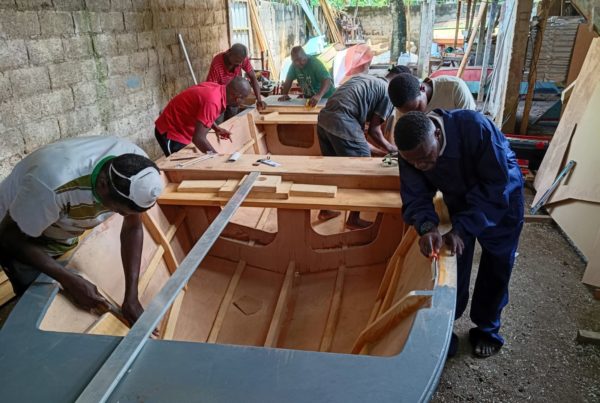
Sechura Azul focuses on making small-scale fishing and aquaculture in Sechura more profitable and more marine-friendly activities, promoting equality and giving women a leading role in the management of hydrobiological resources to improve their income. The strategy of the project, funded by the Xunta de Galicia through Cooperación Galega, is structured around three key outcomes.
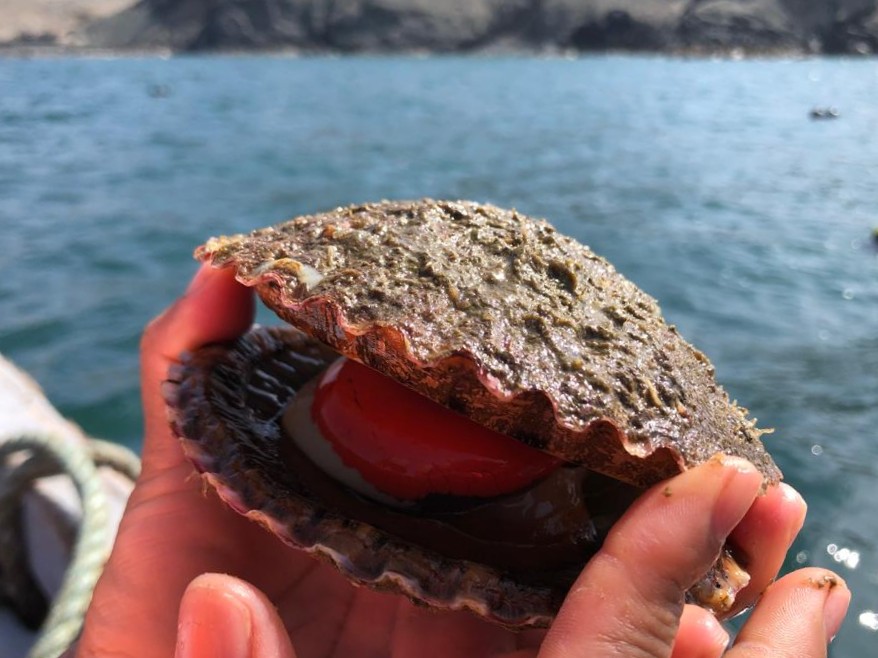
Firstly, it aims to improve environmental sustainability, productivity and management capacity in abalone aquaculture farms in Sechura Bay. The project will work to optimize the production of scallop seed stock, ensuring quality and quantity, and to monitor oceanographic parameters promoting the farming of this bivalve in the natural environment, by sampling protocols and early-warning systems for environmental conditions.
Secondly, the project will focus on women-led trade associations for small-scale fisheries products. Training will be organised with the support of associations that previously received training through initiatives developed by CETMAR in the area, such as ACUIPESCA, VerTyCe and MARdePiura.
To achieve this outcome, knowledge will be transferred between associations, capacities will be strengthened, and greater emphasis will be placed on a feminist approach into operational and working standards to improve the traceability of products, building greater confidence among potential buyers.
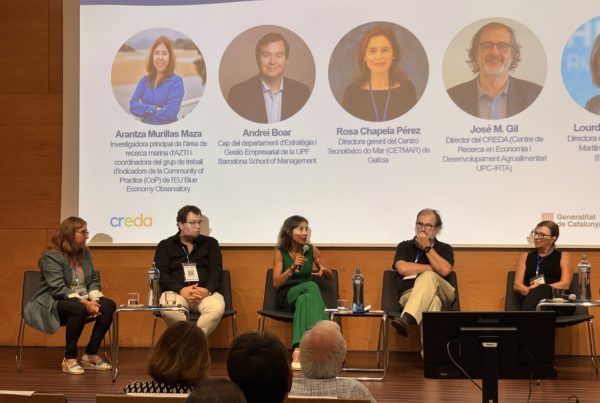
Finally, the third expected outcome is institutional strengthening of the governance of fisheries and aquaculture resources in northern Peru. The actions proposed target technical staff from the Ministry of Production, such as the Directorates-General for Fisheries and Aquaculture, the National Fisheries Development Fund (FONDEPES) and the Peruvian Institute of the Sea (IMARPE). The project plans technical exchanges between Galicia and Peru to foster inter-institutional coordination and encourage a working strategy to improve the guidelines governing aquaculture and small-scale fishing.
First steps
The proposal for this year, based on needs previously identified in earlier projects implemented by CETMAR in the region, focuses on the profitability and sustainability of the value chains for small-scale fisheries and aquaculture, adopting a feminist approach.
Accordingly, an initial training targeted at workers from the Social Organisations of Artisanal Fisherfolk (OSPAS) is planned to be launched in October. CETMAR will send two international experts to deliver theory and practical training on scallop farming productivity, and assist in designing a plan for monitoring and evaluating aquaculture activities.
Scallop
The training intends to strengthen the capacities of the OSPAS in a climate context exacerbated by the expected effect of El Niño on the Peruvian coast over the coming years. This initiative will positively impact on the resilience of these organisations in response to climatic events, leading to improved preventive and recovery measures for scallop farming once normal conditions are restored.