CETMAR’s presentations at the 1st Iberian Congress on Small-Scale Fisheries focused on the dynamics of fishing communities and their socio-economic impact
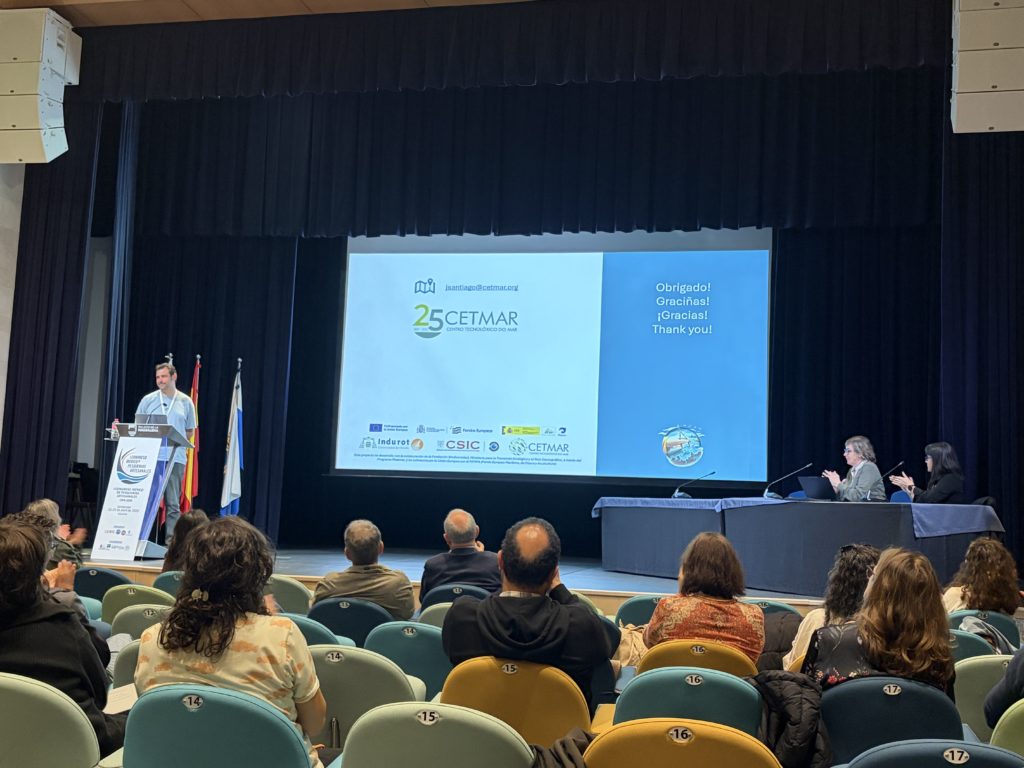
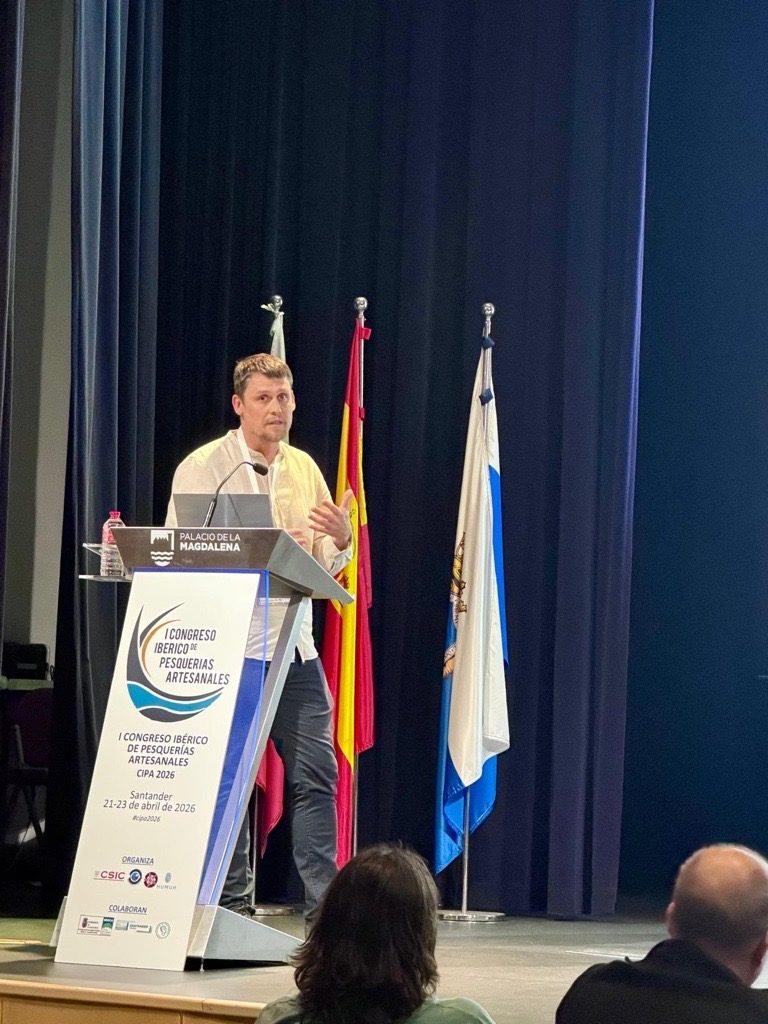
- The Marine Technology Centre took part in this first edition, held in Santander and organised by the IEO, with two presentations on the socio-economic impacts of small-scale fishing and its importance within the economic structure of Galicia.
The first edition of the Iberian Congress on Artisanal Fisheries was held in Santander with the participation of CETMAR’s Fisheries Socio-Economics Area. They attended alongside its partners in the ESPARDE project: the University of Oviedo and IEO -Vigo. This congress aims to bring visibility to the small-scale fishing sector in Spain and Portugal, and to generate knowledge, share experiences and strengthen links between science, management and the sector.
In this context, CETMAR delivered two presentations: one on the socio-economic impacts of small-scale fisheries and maritime spatial planning in Galicia, and another on methodological proposals for mapping and analysing the dynamics of fishing communities.
The first presentation emphasised that fishing communities are essential for effective, equitable and resilient ecosystem-based governance; therefore, understanding how they are organised and connected territorially enables the assessment of social and economic impacts, the anticipation of vulnerabilities and the design of evidence-based policies.
For this purpose, a methodology is proposed that goes beyond the current use of the home port as an approach to the fishing community, incorporating the networks of interaction between ports, based on trade flows. This allows recognising not only the relevant nodes, but also the relational structures that link artisanal fishing communities and reveal differences between fisheries that the home port paradigm fails to capture.
In small-scale fisheries, some ports emerge as key bridges and others concentrate commercial importance, whilst the overall network identifies structurally distinct nodes and a wider variety of destinations. Furthermore, some ports increase their centrality when analysing small-scale fisheries alone, highlighting their strategic role and their lesser relevance to the fishing industry.
Comparing the two networks allows us to identify functional communities that differ from the paradigm based exclusively on the home port, detect critical dependencies, and provide a solid basis for integrating socio-economic information into fisheries analysis. It also demonstrates the potential of network approaches to map the dynamics of each fishing community and strengthen decision-making from a territorial and ecosystemic perspective.
The second presentation, entitled “Mapping the socio-economic impacts of small-scale fishing and maritime spatial planning in Galicia”, highlighted the importance of small-scale fishing as a structural component of Galicia’s coastal socio-economic system.
According to data, more than 3,600 vessels generate €183.9 million in production and €130.9 million in Gross Value Added, sustaining communities that are highly dependent on fishing grounds with a high productive specialisation. However, new uses of marine space or conservation measures — Vulnerable Marine Ecosystems (VMEs) or Areas of High Offshore Wind Potential — introduce spatial restrictions that affect fishing activity significantly.
The proposal for Vulnerable Marine Areas illustrates the scale of this issue: more than 875 small-scale fishing vessels, particularly those using gillnets, trammel nets and seine nets, could see their operations restricted in areas where their landings exceeded €90 million in 2024. With an average of 2.42 crew members per vessel, these restrictions would jeopardise approximately 2,100 jobs, equivalent to 33.5% of employment in the coastal artisanal fleet. Added to this is an indirect impact estimated at €54.7 million resulting from the reduction in essential goods and services. Overall, the economic impact for Galicia would amount to €279.7 million when considering the effects across the value chain.
CETMAR also highlighted that small-scale fisheries actively participate in Local Fisheries Action Groups, acting as a mechanism for territorial governance capable of strengthening social capital, generating economic alternatives and increasing community resilience. Between 2023 and 2025, this sector promoted 163 projects worth €9.26 million, the impact of which doubles to €20 million when direct, indirect and induced effects are taken into account.
The combination of spatial constraints, dependence on inputs and lack of operational alternatives explains the sector’s vulnerability. Integrating geographical, economic and social data makes it possible to identify where and to what extent these impacts are felt, highlighting the need for adaptive governance frameworks combining conservation, economic viability and social cohesion.